“The struggles of artists and cultural workers for fair compensation and financial stability/sustainability cannot and should not exist independent of struggles for housing, healthcare, education, and protections led by people from all walks of life.”
Read More“The composition layers keyboard played by Mary Elizabeth Jo Dixen Pelenaise Kapi’olani Lawson, her vocals (chanting, reading, humming), sounds inside a kitchen, and the voice of Paul Stephen Benjamin singing ‘Black Is the Color.’”
Read More“Indigenous people of this continent have ancestral responsibilities and rights that others do not. Each of us is born with the opportunity to serve our community in a way that fulfills a need. My energy goes towards forging relationships with the plants from this region that remain.”
Read More“Taking the project from its inception to completion helped us deepen our respective creative practices and our relationships with each other and our collaborators. It’s also a process that we invite others to copy freely and use as a blueprint for making similar work in different social and geographic contexts.”
Read More“East, West, North, South, each occupy equal weight on the compass, and all regions enjoy autonomy and self-determination to their fullest possible expressions. Poverty is a memory and prosperity is promised to all. We have achieved Utopia. Now, where do you want to eat?”
Read More“I remember stepping off the plane and thinking, I've made it. This is the promised land. A utopia. A place where dreams come true. Unfortunately over the last decade, I've watched this vision of what America claims to be, fall apart right in front of my very eyes. This utopia is a dystopia in disguise.”
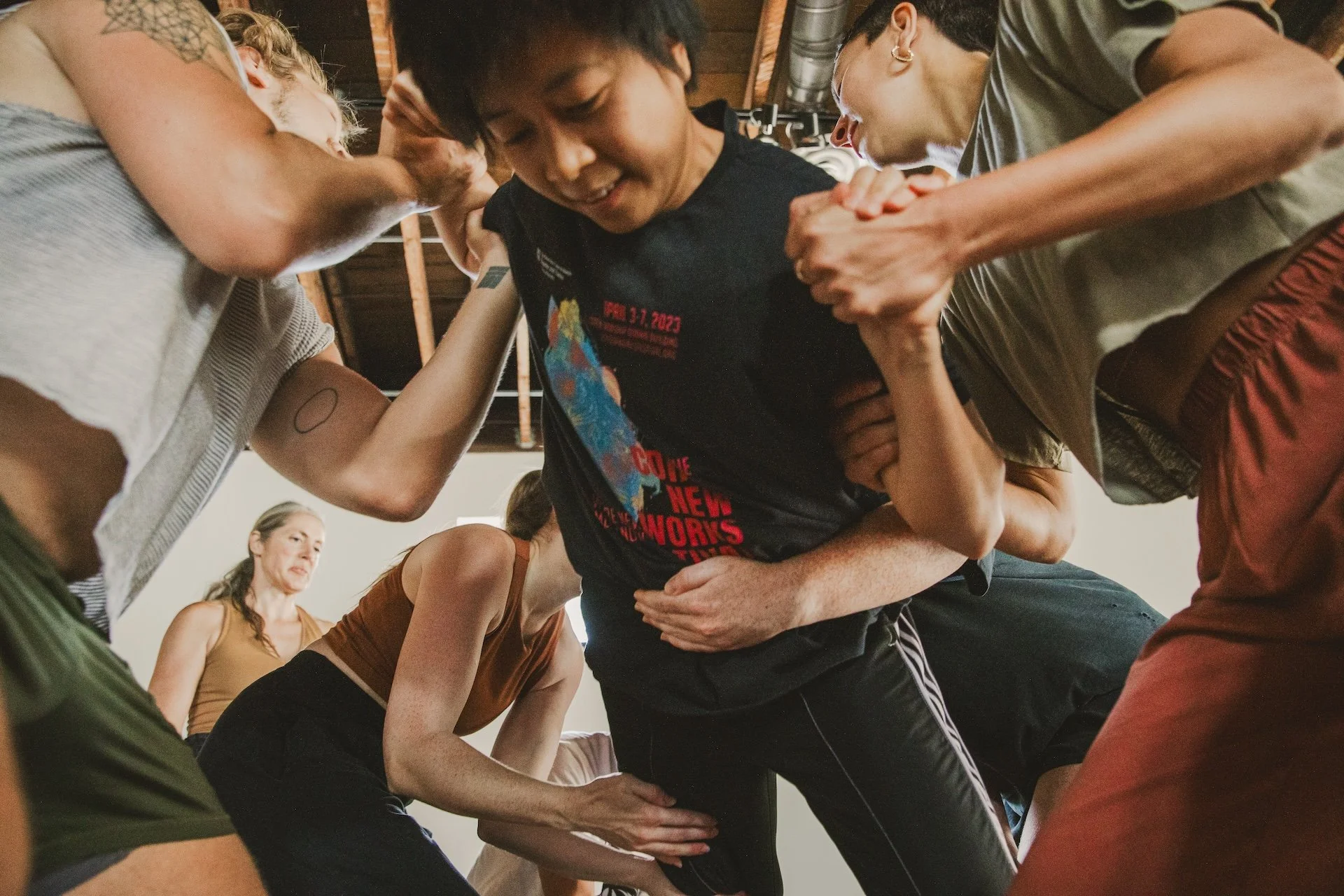
Read More“Horseplay is fooling around. Horseplay workshop is organized fooling around. We are serious about practicing but not always serious within the practice.”
Read More“There is one nurse,
One doctor,
One psychiatric specialist per 100,000 residents in a single district.”
“Providing care is not profitable because the value assigned to providing care is low, while the actual human cost to provide care is incredibly high.”
Read MoreOn September 27th, Annika Johnson, Diana Martinez, and Alajia McKizia joined Jared Packard to consider how critical and evaluative frameworks might change to more fully embrace the uncertainties, indecipherable rewards, and generative failures inherent in socially and politically engaged work.
Read More“These communities helped me find my own value in art making, which is a rare and precious thing. But even in these spaces, the revolutionary spark can get lost.”
Read MoreOn March 29th Dawaune Lamont Hayes, Parker Krieg, Bilgesu Sisman, and Jared Packard sat down for a conversation that examines how artists are aligning their practices with anti-capitalist orientations, and the movement lineages they come from, to cultivate relationships, rest, and regenerative economies.
Read Moreby T Reckling
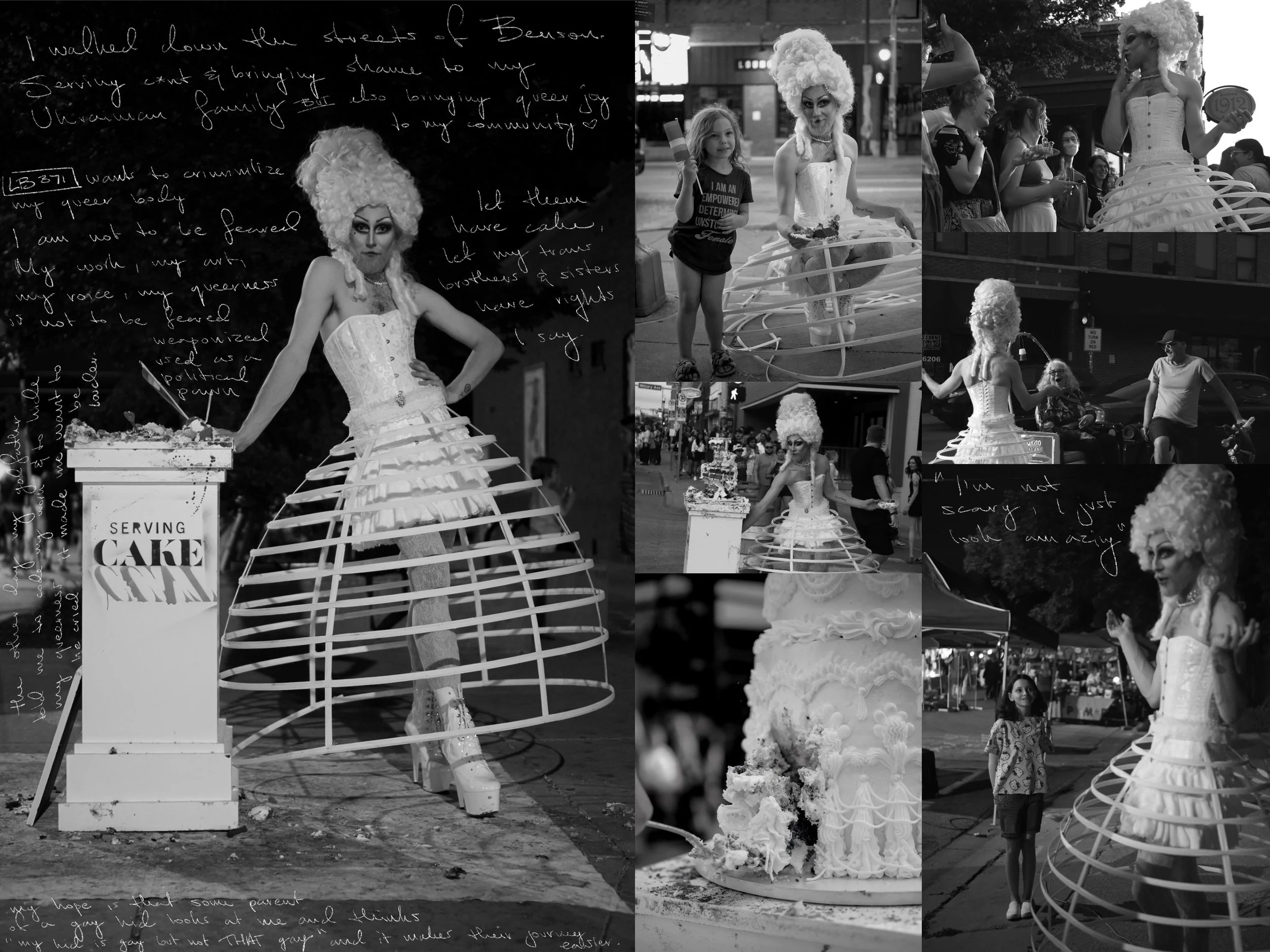
“The intersectional LGBTQIA2S+ political struggles in areas with conservative governments show us a mode of becoming.“
Read More“When I am working in the verge, alongside the screech of the road, the urgency, and the energy of the wild world courses through me. In the verge I think about the imperative of safe passage. I think about the possibilities of what wild spaces can be. I think about how connected we all are. “
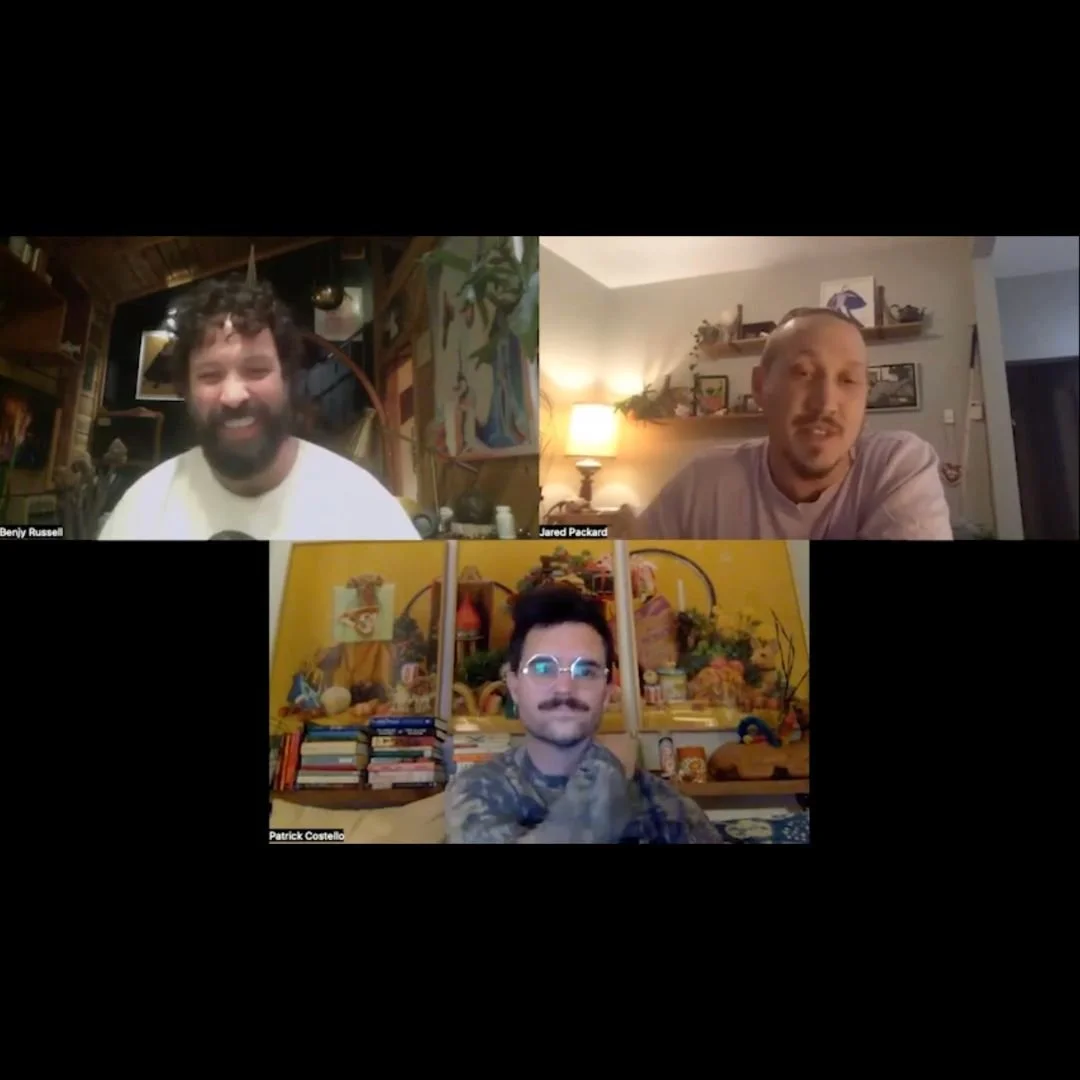
Read MoreOn November 9th, Patrick Costello, Benjy Russell, and Jared Packard sat down to collectively consider how the mutability and pluralities of queer identity and changing attitudes toward queerness influence the ways in which queer artists operate in rural spaces.
Read More“In order for this virtual space to exist, all audiovisual data from each participant is compressed and squashed. Each perspective in the space is contingent to the internet connectivity and technical resources of each other.”
Read More“…we also like to think of hope and what water utopias are possible, as well as speculation, which is also an important aspect in the project--thinking about ecological fragility as a means for fictions and alternative paths, alternate futures.”
Read MoreOn September 28th, Ashley Ahearn, Sarah Rowe, and Lee Running sat down to talk about how creative practice redistributes anthropocentric hierarchies of dominance and control through co-becoming with our more-than-human neighbors.
Read More