
The Medicine Maker eARTh School
Interview with Mi’oux Stabler
May 11, 2026
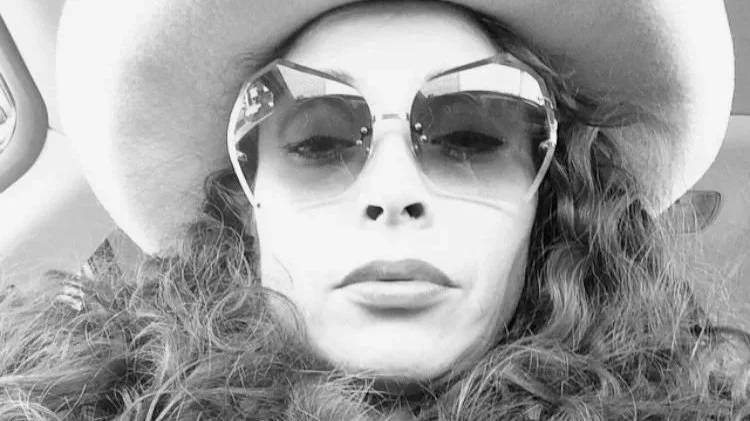
Mi’oux Stabler is one of Amplify’s 2026 Generator Series project recipients. The Medicine Maker eARTh School, Mi’oux’s project, is a living-learning space located on the grounds of the Dr. Susan La Flesche Picotte House of Healing in Walthill, Nebraska, on the Umóⁿhoⁿ Reservation. This site, built in 1906 by Dr. Susan, the first Native American doctor and a woman of the Umóⁿhoⁿ Nation, remains a sacred landmark of healing and community care. At its center will be a large-scale, permanent sculptural garden where plants she once gathered will grow, blending traditional plant medicine with the story of her Western medical practice. We recently sat down with Mi’oux to discuss her work and how it engages with history, land, and cultural specificity. Read the interview transcript below and share your thoughts in the comments section.
Transcript
Speaker 1: Mi’oux Stabler
Speaker 2: Peter Fankhauser
Date of Interview: March 13th, 2026
List of Acronyms: MS = Mi’oux Stabler; PF = Peter Fankhauser
[PF] Mi’oux, thank you so much for sitting down to share more about your background and your work. To kick off, would you mind telling everyone about yourself?
[MS] Ebé bthín-the uwíbtha-taminkhe. Umonhon izházhe wiwíta-the Mihusa shi. I will tell you who I am. My Umóⁿhoⁿ (Omaha) name is Mihusa.
Hello, my name is Mi’oux’sah. Thank you for having me. This is my Umóⁿhoⁿ name, and it means loud voice moon. I am a citizen of the Omaha Tribe of Nebraska and Iowa. I believe my creative practice has always been tied to the relationship that exists between myself, place, and time. And I know it began in our homelands four days after I was born, during the ceremony, and introduced to Wakonda’s creations, like plants, trees, the winds, the birds, and the soil. It was the first day my feet touched the land.
Since then, I have lived in many places, and they have influenced my creative journey and love for nature, especially plants and the blooming cactus in the Sandia mountains I remember as a kid. Over the past eight years, most of my work has been land-based art with our native plants. Before that, my creative journey began in junior high with 35mm film photography. I loved the whole process, taking the pics, processing them, and watching them slowly appear in front of my eyes. I never took to digital photography the same way, but I should try it out more.
I also like learning Umóⁿhoⁿ crafts, sewing, and different types of beading. I love making anything with felt. Sometimes I struggle to call myself an artist, but in the background, I’m always making something. Most things I try are way out of my league, but I go for it anyway. My ideas can grow quickly, kinda like my sweet kid and this project.
[PF] Thank you for sharing that. One of the things I admire most about your practice is that the work is so fully integrated into your day-to-day. Your work with land, language, and how you document both through photography, doesn’t look like a more traditional studio practice that happens in isolation. You’re bringing all these people and what you’ve learned from them forward with you in a practice that’s rooted in culture, history, and the land. It’s a really beautiful expression of a lifeway.
Picking up there, could you talk more about the Medicine Maker eARTh School and the questions you’ve been thinking through that led to this project?
[MS] I think this project has been in the works since I was 13, when we first moved back to the reservation. My parents bought a big old, odd-shaped house in Walthill, NE, that belonged to Dr. Susan La Flesche Picotte. My mother’s been the caretaker of that house now for over 30 years, and I have been fortunate enough to call it my home, too. This is where the Medicine Maker eARTh School is situated. My mom and I had been wanting to work on a project together, and this seemed like the right opportunity.
Dr. Susan is widely acknowledged as the first Indigenous person to earn a medical degree. She is almost always portrayed as this strong Christian woman who served both white and Native people, but there's so much more to her story, especially during her formative years living on the reservation amongst her Umóⁿhoⁿ people, that I wanted to share.
The last treaty between the United States and the Omaha Tribe was signed within a couple of months of Susan’s birth, so she lived through the time of allotment and laws being placed on the land that dismantled our way of life. She was 17 in 1882 when the Allotment Act was in full swing, and our communal land was being divided into individually owned parcels by people who did not speak Umóⁿhoⁿ. Growing up, Susan was always listening and quietly observing. She enjoyed learning. Before she went to medical school, she was already playing an important role in the life of her community. She was multilingual. The Medicine Maker eARTh School is a celebration of her love for the people. It represents the parts of her story that are well known and the compassion she carried for her Umóⁿhoⁿ kin. When she arrived at her patients’ homes with her leather bag, they knew it was full of white man's medicine, but it was delivered by one of their own.
I hope that resonates with people in Walthill and other parts of the reservation and visitors. I hope this project helps people think more deeply about what it means to heal, and I hope they get excited about learning more about Dr. Susan and her passions and the less well-known, really inspiring parts of her life.
[PF] What an incredible person. That’s such a fascinating history that’s so deeply connected to land and the significance of place, which are so foundational in your work. Can you talk more about your relationship to land and what it means to you?
[MS] You know, I lived in a lot of great places, and no matter where I was, I was always excited to come home. I loved the mountains. I lived in Colorado for a very long time. I had a joyous time in the Bay Area, and I've lived out of the country, but I always come home, back to my mom's house. One of the coolest things about that house is an engraving Dr. Susan made on the mantle that reads “East, West, Hames best.” I relate to that statement because it took me leaving many times to realize that all I wanted to do was come back, especially when I was ready to have my daughter. And it was soon after living out of the country in Australia for a couple of years that I started to accept my direct ties to this place and this land. I feel I’m at a place in my life now where I can make a little bit of difference. I think I’m here to help people learn about this land, and all its beautiful characteristics, and how we can come back into relationship with it after all the damage that’s been done.
And that relationship has to be guided by the seasons. This is super important. I look forward to every single one of them. Like the cold, or the heat, or the rain today, you know. I hear people complain about how gloomy it is, but that's just part of it. That's part of what needs to happen right now, and it’s beautiful. Let's be thankful for it, and the cicadas, and the sunsets. Now I’m in a place where I can take those things people connect to and have associations with, and bring in the knowledge of soil, plants, relationships, and time. For me, I've been working with specific plants for several years now, and I have a real relationship with them. I call them plants, but I see them as relatives and teachers. They have been teaching me for many years now, and I am very grateful for their presence in my life. My work is really about restoring balance between people and land and remembering that we are not separate from the ecosystems that sustain us.
[PF] That seems like the perfect note to end on. Are there other projects you’re working on that you’d like to share more about?
[MS] I have several projects happening right now, but the one that I'm really excited about is up at the Dr. Susan La Flesche Picotte Center, also in Walthill. I'm working with the landscape architect to plant a food forest, which is allowing me to work with bigger plants. I've never worked with the trees before, so this is a really exciting opportunity to bring back choke cherries, wild plums, crab apples, sumac, and elderberry. It’s a collaborative project with the Center for Rural Affairs, which also has a maker space in the Dr. Susan Center. They’re doing great work bringing more art and design back to the reservation. People use it to work on regalia and traditional crafts, too. I’m excited that the food forest is going to be part of that. I think the closeness of the two helps reinforce the idea that learning about planting and preparing our traditional foods is also an important art form. I'm pretty stoked about that.
I’m also working on an Indigenous Garden at UNMC. We're moving into year seven on that project, but it's to happen this year. And it's been fun. Designing these spaces for others to enjoy is such a thrill for me. I'm super grateful I get to do that work. Seeing this garden come from those concept drawings at the very beginning, to where it is now, it's going to be a place for folks to be around some plant relatives, and hopefully find some peace and serenity.
The two other projects I’m excited about are with the public schools on the reservation. These are my favorite opportunities, and I’m grateful for them.
[PF] All of that is so exciting. Thank you for taking the time to talk today with everything else you have on your plate! It was really inspiring to learn more about your work, and I’m looking forward to great things to come.
[MS] Piece by piece, we’re getting there. Thank you–definitely more to come.
*This transcript has been edited for length and clarity.
Mihusah is an Umóⁿhoⁿ (Omaha) wau (woman) of the Iⁿkesabe (Black Shoulder Buffalo) clan and a Prairiescape designer. Her work honors our land of two centuries past, when fire and buffalo hooves cultivated the vast plains, and when the woman of the lodge tended gardens filled with corn of every color. Her concepts begin and end with the intent to restore balance in the relationship between land and people by creating spaces of engagement. Prariescapes are living artworks where elder plant relatives are respected teachers, the land and all its lifeforms are the classroom, and humans are helpful and hopeful students.
Amplify’s programming is made possible in part with support from the Andy Warhol Foundation for the Visual Arts, the Nebraska Arts Council and Nebraska Cultural Endowment.