
All About Love
Interview with Jewel Rodgers
February 24, 2026
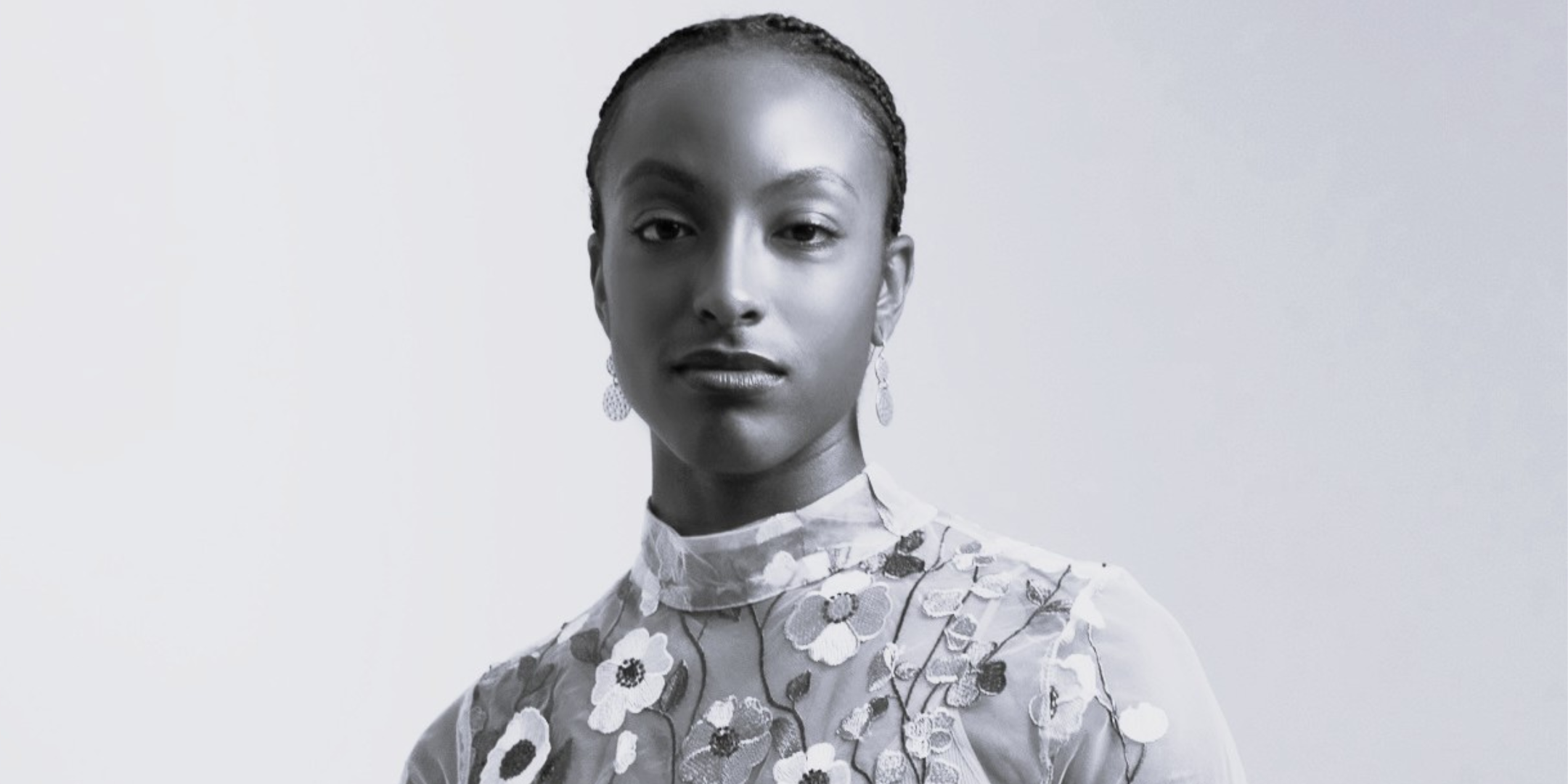
Jewel Rodgers’ All About Love explores love as an active practice of self-awareness and repair. The project, supported by Amplify, will culminate in a three-track EP of recorded spoken word and jazz, a public listening session and performance in the summer of 2026, and a physical publication archiving the poems, collaborative process, and reflections from her collaborators. Rooted in courage and curiosity, her project questions what it means to love within bodies conditioned by histories of violence and survival. How can love function as a reflexive tool to confront those histories? We recently sat down with Jewel to talk more about All About Love and how it aims to find out. Read the interview transcript below and share your thoughts in the comments section.
Transcript
Speaker 1: Jewel Rodgers
Speaker 2: Peter Fankhauser
Date of Interview: February 17th, 2026
List of Acronyms: JR = Jewel Rodgers; PF = Peter Fankhauser
[PF] Jewel, welcome. Thank you for being willing to share more about your work. We really appreciate it and thought we could just dive right in. Can you share a little bit more about the impetus for making All About Love and what questions you've been thinking through in your practice that helped it evolve?
[JR] All of these ideas were happening in the background, and then all at once. Happening in the background was my growing interest in jazz. Actually, my mom used to play jazz as punishment when I was younger, because I hated it. I didn't understand it. It was loud and busy. It just was blah, blah, blah. She would turn it up in the car when I was being too spicy. It was not my thing. Recently though, I'd say over the last year or so, I started listening to jazz in my community specifically. I would go to North Omaha Music and Arts and hear jazz played by people in our community. And I think that's where the relationship with and appreciation for jazz began to grow and evolve in a new way from a general appreciation to a deep sense of curiosity and wanting to know more.
That was also sort of layered with a budding interest in swing dancing and the music that underpins certain styles of dancing, like Lindy Hop for example. My experience of that was also tied to community, the Omaha Jitterbugs specifically, where they teach you all these forms of dance. And so, my appreciation for both jazz and swing started to move beyond what I would see in a movie or on a TV show and think was really cool. It was now very present in my community and a part of my life in a less abstract way. Getting closer to that was exciting to me as a poet because it opened up new ways of thinking about love.
In my personal life, exiting a very long-term relationship and then taking a break from romantic relationships for a year or so and now entering a new one led to a different form of self-questioning and self-awareness. I found myself trying to be more mindful, or being forced to really be more mindful, of the ways I was and was not showing up for others in relationships beyond the romantic realm—in all different types of relationships.
[PF] I feel like there’s also this improvisational element to love. It requires emotional agility and a willingness to adapt, similar to jazz, or even dance, in a way.
[JR] I wouldn't say that I look at jazz and think of love. It's just that I am thinking of love, and I'm also thinking of jazz, and it'd be interesting to marry the two. It'd be interesting to combine the two to see what happens and to create new opportunities to collaborate and make projects that can be experienced in more than one way. That's what I really enjoy. I think that's the beauty of spoken word for me personally, is that it’s a way to feel, hear, and see what’s written on the page. It adds another layer of depth to whatever I'm saying, because the emotion comes through in a way that it might not always translate on the page.
[PF] That’s such a good point and I want to tie it back to what you said about the difference between experiencing art forms like swing dance and jazz aesthetically as opposed to experiencing as embodied art forms practiced within a community of people. That point is well taken and a great thing to call out, especially in relation to your project because there are elements of both recorded and live performance that factor into All About Love. They’re very different modes of connecting performer to audience that register differently in a creative practice. How are you thinking through that?
[JR] I feel like it's very much bearing witness and exemplifying vulnerability. It's one thing to open up about your life on the page and it's another thing to open up and show by example what that means. It’s a different invitation, a different way of asking an audience to join in that experience. For me, I'm hoping that the show, the live experience will do that. I may be oversimplifying here, but I think a lot of creating a deeper connection as a performer happens in moments of pause. The raw emotion and the words that will be coming out of my mouth carry their own weight, but there is also the space nestled in between that gives time to reflect and to hold the silence just a little bit longer. I think those moments do a lot to encourage people to follow along in the journey on and off the stage.
I also, to be honest, just want people to feel entertained. I'm not gonna lie about that! I want people to show up and be glad that they came and have a good time and still find something deeper that hits or shifts something in them. But I want it to feel like a natural part of experiencing the performance. I want people to feel like they can access and relate to the work in a way that better enables them to understand different dimensions of what love means in their own lives.
[PF] There’s a lot of love in the way you talk about your work and the idea of love seems to show up in a lot of different ways in this project. There are aspects of romantic love, there's the love of the medium, the love of form, the love in collaboration, love as an expression of grief or loss, or even love as a tool for self-reflection and repair. Can you talk more about how you’re thinking through some of those in your work?
[JR] I've actually never been one to write a love poem. Ever. I think the closest I've ever gotten is poems that gesture toward forgiveness or appreciation. I struggle with the romantic idealization of love in poetry, and I think that was because I was always questioning the permanence of love. And so, I never really wanted to like honor or fall into those emotions, really.
I also hyperanalyze the idea of love being labor and the difference between these sweet, lovely butterfly feelings and the reality of having to bring up a tough conversation or a grievance. I deeply question the dichotomy of that and struggle to use flowery language around love partly because of it. It's always been a little bit more serious to me. At the same time, acknowledging that helped me think more about the ways that I keep love out of my life. And what ties that may have to how someone is brought up in or outside of the home—the histories that embed themselves into our bodies and the bodies of the people we love. What leads someone to choose toxic ways of survival, right? What relationship do you have with survival that underpins your inability to communicate a grievance or to face conflict or to face self-inquiry? What are some of us protecting ourselves from that prevent us from letting other people in?
[PF] Speaking of history, you touched on this a little already, but can you talk more about the history of jazz in North Omaha and how it resonates in the work?
[JR] I mean, right now I can only speak from my personal experience and what I’ve learned from elders. I still am early enough in the project that I have more literature left to read. We know that folks back in the day used to say, if you hadn't played in Omaha yet, you weren’t taken seriously. Omaha was a testing ground for musicians. And a lot of very incredible, wonderful, big names came through Omaha to perform on North 24th Street. They were the real deal. I’m looking forward to learning more, doing more reading, and talking to more people about the culture of building happening then and still happening today. I’m interested in knowing more about who came through and why and where they were coming from, and I’m also interested in how North Omaha has changed since then. I think the purpose of thinking through the history of jazz is just to eventually communicate more about the beauty and value North Omaha holds. I think that's really what I'm getting at. I feel like in everything I'm doing, I'm trying to advocate for North Omaha in a way that celebrates our culture.
[PF] I feel like that's one of the incredible things about this project. You're very much rooted in this history and research around place, but layering artforms like performance and poetry, both of which hold so much potential to resonate in different ways, on top of it. To me, that’s the best of both worlds.
What other projects are you excited about right now? Is there anything else happening peripherally that's influencing this work or vice-versa?
[JR] I am doing so many things. I would say at the top of my list is the State Poet Project and my fellowship with the Academy of American Poets. My State Poet Project is three parts. The first part is hosting five showcases across our three congressional districts. We're in the planning stages for our first one which will be in Omaha. The second part is to take Nebraska-based writers outside of the state four times and outside of the country twice. We've been to New York for the New York Poetry Festival. I'll take one or two folks to DC for a centennial celebration of Langston Hughes and then we'll go to Rotterdam for the International Poetry Festival in June. And the third and final part of the State Poet Project is programming fun pop-up events that anybody can attend. We’re hoping to pull in people who might not consider themselves poetry lovers and create a broader network of poetry supporters.
And then we have Homegrown, which is a series of 15 intimate art shares across the state of Nebraska, where we invite people to come out and learn and share what they love about the humanities in Nebraska. We've been to Broken Bow, McCook, Hastings already and we're headed to Norfolk, Kearney, and Scottsbluff soon. I'm just now realizing in real time that I've never been a full-time working artist before. So, I'm balancing all these commitments with finding enough space to get weird and make my work, you know. It’s a challenge, but a good challenge to have. I'm looking forward to all of it and excited to share All About Love with everybody this summer.
[PF] I can’t wait to see it all come together. Thank you for making time to talk more today and for all you’re doing. It’s really inspiring. Looking forward to more to come.
[JR] Yes, thank you. Definitely more good things to come.
*This transcript has been edited for length and clarity.
Jewel Rodgers is the 2025–2029 Nebraska State Poet and a 2025 Academy of American Poets Fellowship recipient. An Omaha Entertainment and Arts Award recipient for Best Performance Poet in Omaha and a three-time TEDx speaker, she has toured nationally for more than a decade, performing in schools, festivals, conferences, and public spaces. Her work has appeared in projects such as 100 Years | 100 Women (Park Avenue Armory, New York) and she was a finalist in the 2024 Blackberry Peach Poetry Slam. An interdisciplinary performer and spatial practitioner, Rodgers merges poetry, storytelling, and placemaking to inspire communities across Nebraska and beyond.
Amplify’s programming is made possible in part with support from the Andy Warhol Foundation for the Visual Arts, the Nebraska Arts Council and Nebraska Cultural Endowment.