
Ground Rules: Public Art and City Planning
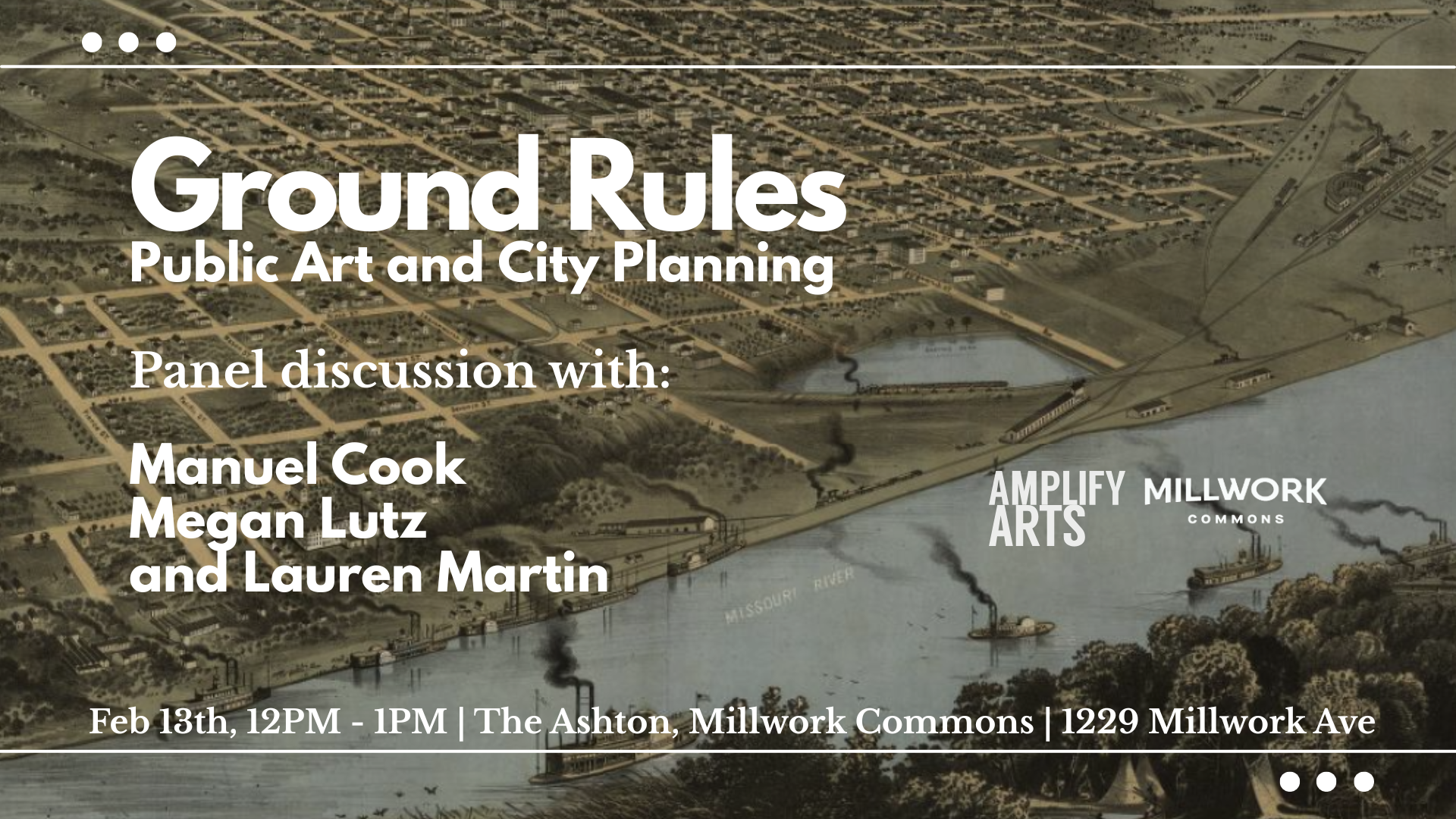
Ground Rules: Public Art and City Planning
February 13th, 12:00PM - 1:00PM
The Ashton
Millwork Commons
1229 Millwork Ave, Omaha
Amplify’s next panel discussion, Ground Rules: Public Art and City Planning, considers how urban planning shapes the ways public artwork is placed, encountered, and interpreted within the built environment.
Join us Friday, February 13th from 12pm - 1pm at the Ashton in Millwork Commons to learn more about the evolution of planning processes and their cultural, spatial, and political implications on the role of public artwork in civic life with urban designer Manuel Cook and architect Megan Lutz. Together with moderator Lauren Martin, who oversees Partnerships at Amplify, they’ll assess what renewed investment in large-scale infrastructure projects across Omaha means for the future of public art in our city and its capacity to enhance individual wellbeing and community vibrancy.
Free and open to all. Bring your curiosity and please RSVP to attend.
The Ashton is wheelchair accessible and located in Millwork Commons, a walkable and bikeable district off the number 4 Metro Transit Omaha bus line. If you have any accessibility needs, please reach out to us at least 48 hours in advance of this event at info@amplfiyarts.org.
Free parking can be found north of HELLO Apartments and in the lot west of the Mastercraft building. Metered Parking is available on Millwork Ave, 13th St, 12th St, and Nicholas Street. Be sure to download the City of Omaha’s Park Omaha app or pay at the purple kiosks. Click here for directions.
Alternate Currents programming is presented with support from the The Andy Warhol Foundation for the Visual Arts, the Nebraska Arts Council and the Nebraska Cultural Endowment, and Metropolitan Community College.
About the Panelists:
Manuel Cook (Manne) is an interdisciplinary urban design leader with nearly ten years of housing policy, real estate development, urban design, neighborhood & community development experience. He has a track record of launching and delivering district-scale infrastructure and placemaking initiatives that create more vibrant and liveable built environments - examples include founding the North Omaha Trail, Fabric Lab, and Fabric LLC, and leading area plans for North 24th Street and the Omaha Inland Port Authority. Manne was raised in North Omaha with deep roots in the community and has an expertise for aligning development, infrastructure, real-estate strategy, and cultural assets into implementable plans and capital projects. He has a knack for navigating complex systems and organizing catalytic collaborations that move projects from idea through strategic planning & design, funding, construction, and activation. He specializes in the planning and development of projects and initiatives that leverage community assets, art, history, and culture to create more livable, people oriented, environments of health & healing.
Megan Lutz, AIA, LEED AP is an architect and Partner at Alley Poyner Macchietto Architecture. She possesses a comprehensive knowledge of all aspects of the design process, from master planning through building construction. She draws from a range of project and research experiences, including her time as a Fulbright Scholar at the Center for Public Space Research in Copenhagen. With a passion for Omaha, Megan takes particular interest in the revitalization of its central neighborhoods, through a thoughtful and strategic approach to urban design, planning and architecture that is driven by the needs of the city’s current and future residents.
About the Moderator:
Lauren Martin oversees Partnerships at Amplify Arts. She has devoted her career to building, developing, and activating organizations that enhance our region. Most recently, in her role as Executive Director of Maha Festival, Lauren worked to support dynamic programming that meaningfully connected people from near and far with Omaha’s creative communities. Her role at Maha – as well as previous roles at the Omaha Community Foundation, Omaha Performing Arts, Hear Nebraska, Saddle Creek Records, and more – helped her understand the systems and structures that support our community’s cultural resources and Omaha’s potential as a place where artists can live, work, and find meaningful support.